Friday, November 7, 2014

Day 303: Coaching children and coaching adults - what makes you coachable?

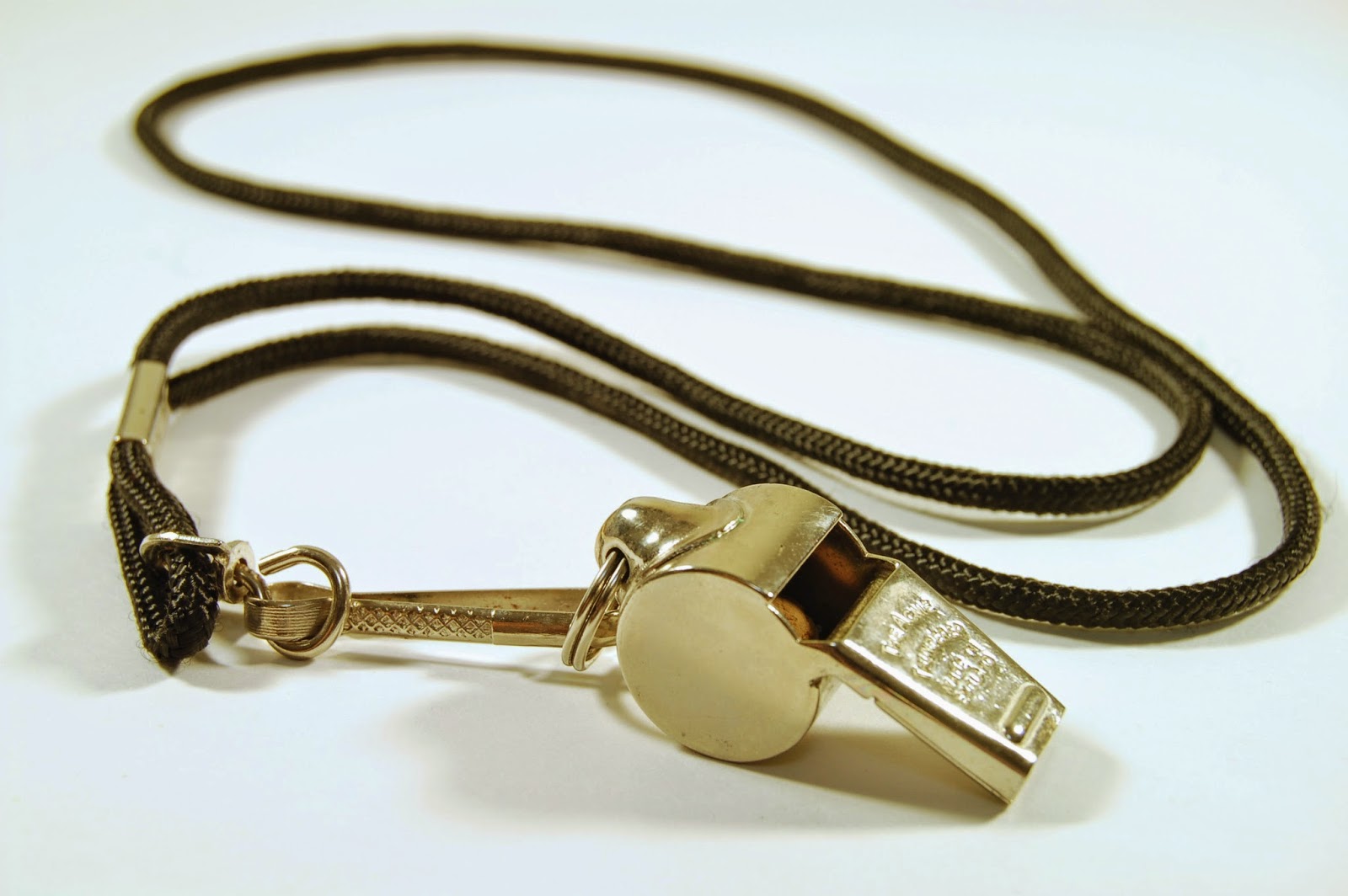
I have been helping out my speed skating coaches by being another on-ice adult for the kid's sessions. Some of these sessions can have 25 kids, and with one coach, it can be a challenge to keep them engaged. Even with a whistle.

I really enjoy working with the kids, which range in age from 7 to 14, as they are all so unique. They all have different abilities, different strengths and opportunities, and different personalities. Standing around the centre circle, listening to the coach, some listen intently, others goof off; some are shy and others are outgoing.  But once they start skating, the differences become physical. You can also easily see who was listening and who wasn't. :-)

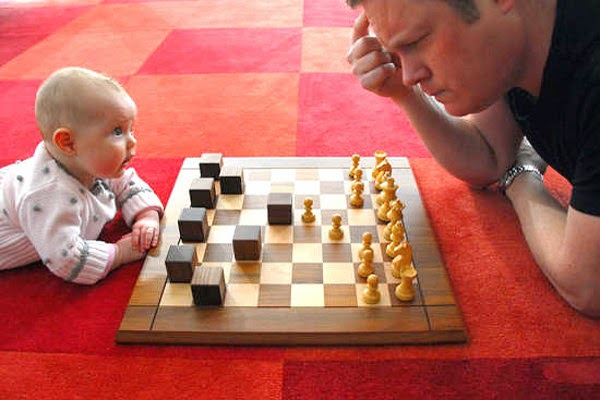
Some kids are very coachable. What do I mean by coachable? A quick Google search turns up the following coachable traits (as espoused by those SMRTer than I): 

  • Humility/critical self-evaluation
  • Intrinsic motivation/bias to action
  • Purity of purpose/singular focus
  • Willing to surrender control/valuing the coaching message
  • Strong belief in ability to succeed/faith/stubbornness
Kids perhaps have other elements at play that must be addressed by both the coach and the kid:
  • Fear/fear of physical injury/fear of failure
  • Desire to conform/be part of the team/contribute to team success (for team sports)
  • Emotional immaturity
This past week I was able to spend several days coaching adults, very experienced SMRT adults, in kaizen, and specifically coaching on value stream mapping and cycle time reduction. I was there to challenge them, keep them on track and focused on the target outcomes of the kaizen. And of course, to keep developing my coaching skills.

So as I look at the list(s) of traits of coachable kids listed above, how well do these map to adults? How well do these correlate to my experience?

I found some of the challenges that come with coaching adults are:
  • Historical bias to action ("In my company, we did it this way, therefore it is the right or better way"/"You have to use this tool or method to solve that problem")
  • Unsure valuation of the coaching message ("I know just as much as these guys"/"I know better"/"I already know how to solve this problem, so I don't need to listen/read/pay attention")
  • Desire to stand out/be recognized ("Hey team, look at the cool solution I came up with"/"I have an MBA")
  • Difficulty in honest, critical, non-self-deprecating self-evaluation ("I'm terrible at public speaking"/"I'm awesome at PowerPoint")
Writing this down - if nothing else - helps me keep in my mind what behaviours I need to avoid or minimize to be more coachable. Particularly in valuing the coaching message. 


Now I just need to develop the same list of what makes a coach a good coach.

AMac


Friday, October 31, 2014

Day 296: Happiness and its place at work

I was having a conversation with a cohort today about happiness and success - does one yield the other, and if so, in what order? Does happiness result in success, or does success result in happiness?

I think happiness leads us towards success, and although there are some successes that make me happy, that happiness is transitory, temporary. It's a kind of feedback loop - the positive reinforcement of the success will increase the happiness overall. That leads right back into the intrinsic motivation to seek challenges and work towards success.

There are also some great non-successes (read: failures) that - over the long view - can make me happy because they eventually contribute to a future success. I have observed that many people learn best when they fail, er, struggle with a task, instead of having it handed to them on a silver platter or being spoon fed. If it was easy, it wouldn't be as much fun when you succeed. 

I had a pretty epic failure this past weekend, when I competed in my very first short-track speed skating meet. I had a terrible time in my three races, partially due to a nagging injury with my foot, but mostly due to a nagging negative attitude. I came into the meet expecting to perform horribly - so I wasn't surprised when I did. I tried to blame the injury for it all, but in reality, I had already admitted failure even before I started. My mind was not ready for me to perform the task in front of me, I had not prepared my mind (and heart) to do the work. 

I'm a pretty positive person overall - I prefer to be a positive force for change - but even I get grumpy now and then. Sometimes the storm clouds are a-rumbling and I throw a little lightning around. Sometimes it's very targeted at an individual or an incident, sometimes it's a general annoyance with the world. Usually the latter means I need a vacation while the former is an indication that there's a specific opportunity for improvement. 


I have another 6 weeks of fairly focused work ahead of me, before I can take a real break. Within that time, I have one more speed skating meet and our recertification audits. Both are BIG DEALs to me. I want to be successful at both. So it's time to knuckle down, and get on with the tasks at hand. I just have to remember to smile once in a while. 

Monday, October 27, 2014

Day 289: How do you help really really SMRT people? Get out of their way

This week I had the pleasure of helping a Black belt team with supply chain kaizen at a local technology company. This team, almost 20 people strong, was chock full of really really smart people. 

In fact they were so SMRT that I really had little to do, little to offer in they way of help beyond the occasional suggestion or challenge to the group. It's a bit of an odd sensation. I suppose I could have stuck my nose in to more conversations, but I was worried about overly-directing them, or influencing them too much. As always, I might have gone after different areas or opportunities than what the group chose to pursue, but that's one of the great benefits of participating in these events - I get to see what unfolds and enjoy the chance to see how other people think.
Balancing the "too much" vs. the "too little" is still my challenge. It's hard to find the sweet spot. 

This week was also a chance to let go a bit more, to be away from the office and delegate a fairly important and high profile activity. I am really lucky to work with a very competent team, so I knew it would all be ok. But I was very anxious in that I wished I could have been a fly on the wall and seen what had transpired! I think I will take this as an opportunity to further reflect on my role at my organization and how that might still further evolve.

AMac

Friday, October 17, 2014

Day 282: Where did the time go?

I have been lagging in my blogging activities lately, and I really have no good reason for it. OK I was busy with... work? family? friends? dog? skating? racing? volunteering? coaching?

Yep - all those things have been keeping me busy. Most of those things, I would say are important.

So why do I feel like I haven't accomplished much?

Perhaps it is because there are too many things in that list. Many of us have been led to believe that the ability to multi-task is a GOOD THING. 

It's the kind of attribute we like to put on our cover letters and resumes, we list it in job descriptions as something desired of our candidates.

But the older I get, the more I realize that not only am I terrible at multi-tasking but that a lot of other people are pretty bad at it as well. It's been written that our brains can only keep a reasonable grasp of 5 to 9 things/concepts/thoughts at one time. So why do we try to do more than that? 

There are a lot of times when multitasking will cost more time/money/energy and cause more confusion/defects/grief. Particularly when we don't give our brains enough time to rest - a break between tasks - to allow for refocusing.

Since I returned from my conference in mid-September, I have been running around like the proverbial headless chicken, trying to keep tabs on too many things, fingers in too many pies, ears tuned into too many conversations. 

Information is everywhere around me. I can get emails on my phone, my iPad, my laptop, and I can seamlessly transition between all three. I can IM with my peers on any of those devices; no problem. I can watch TV, YouTube, or some obscure European movie with subtitles on any of those devices, while thinking about that supplier audit I need to finish planning, you bet. I can take my laptop to a meeting and work away, while still keeping an ear on the conversation going on around me. 

No I can't. Not really. Not if I want to be effective at the task at hand.

So if I leave my phone at my desk and miss your text, or don't answer your email right away, don't take it personally. 

I'm just trying to focus on something.

AMac


Thursday, September 11, 2014

Day 245: Wandering in the Desert

This week I am spending my time at a conference for those involved in the Information and Communication Technology (ICT or more loosely refered to as the "telecom") industry. It's an annual conference, focused on quality, reliability, continuous improvement, customer satisfaction and so forth, many of the main principles of ISO 9001 and TL 9000 (an ICT-specific flavour of ISO 9001, kind of like ISO 9001 on steroids).

This conference is great for meeting people, as many conferences are, but perhaps more importantly to get a sneak-peek at some of the trends in the industry and to see how other companies have tackled tough problems. One particular presentation, from a big name in the ICT industry, talked about making the organization more effective by making employees more engaged. Happier employees leads to better work which should lead to happier customers and more revenue, right?

I have written about employee engagement before, talking a bit about the Gallup 12, and actively engaged or disengaged employees. This organization took a slightly different approach, which I found really interesting.

 They broke out their plan to get happier emloyees into four key steps:
1: Self-Awareness. Talk honestly about strenghts and weaknesses of every team member, and as a group commit to never letting that employee fail because of a weakness.
2: Fear. Face your fears, look them straight in the eyes, then put it in a box and keep clear boundaries around it. This can be a personal fear, a professional fear, or a group/organizational fear.
3: Clarity of purpose. Clarity of role, responsibility drives performance and reduces time spent stalled, waiting or worse "wandering in the desert" aimlessly (where Net Performance = Actual Performance - Wandering around in the desert). This means total transparency in roles, processes, responsibilities, and more importantly breaking down of long-established silos.
4: Assess and Measure Engagement. Using simple surveys, assess engagement via two attributes: advocacy ("would you recommend this company to your family and friends as a good place to work?") and commitment ("doing the right thing for the company and the customer even if it's difficult/harder for you" and "sticking it out and fixing it up, not just checking out").

Now, they piloted this with a small team because, let's face it, it would be challenging to do this on broad scale. They went through the above steps, and then re-assessed engagement a few months later. They found a small increase in the number of actively engaged employees, but more importantly, they saw a significant decrease in the actively disengaged employees. This is important - these are the employees that can rot an organization from the core outward, they can be extremely toxic to the effectiveness of a team. Over three years, this group improved their departmental KPI 3-fold. That's the power of converting or eliminating those who are actively disengaged.

I like that they talked about fear, and that they also agreed that they had to support people and not let them fail due to a known weakness. Some weaknesses can be addressed through training, mentoring, practicing and modeling different behaviours. But some are less easy to address and this company decided to be honest about it and get on with the work. Not to say they turned a blind eye to serious, systematic deficiencies, but instead they were honest about which ones were critical or potentially fatal to the organization and which ones weren't (hint: none of these weaknesses are truly fatal, especially once you know about them).

I also liked that they gave a name to waste genereated due to lack of clarity - "wandering in the desert". How often do we feel like we are just out there, slogging away, not making any progress, not really sure where we are going, and hey, didn't we *just* cross this sand dune 20 minutes ago? As a physics major (read: nerd) we used to have a joke about "executing a random walk" (it's something particles can do) as an analogy to killing time, doing work that has little to no value for either the end customer or the internal customer, wandering in the desert.

No one can be 100% effective, 100% of the time. But perhaps we should think more about why we are wandering around aimlessly in the desert - because I bet if we stop and think about it, maybe even write it down when we become aware of it - the causes will reveal themselves for what they are: inefficient internal processes due to lack of clear vision, goals, responsibilities.

I for one plan to start taking a compass with me if I go execute a random walk... I may still walk randomly but at least I'll be aware of it.

AMac

Saturday, August 23, 2014

Day 225: Gaining some perspective through time

This past week, I hosted a tour of my organization. The visiting group was from Calgary and they worked in the financial services sector. They wanted to see how one company had adopted lean, to hear about their journey, their successes and their challenges. Within the group's members was a guy with whom I'd completed my Black Belt a few years prior. He had actually started his Black Belt in an earlier session, but completed at the same time as I. As part of the Black Belt training, you perform a lean assessment of an organization, and my friend had actually assessed Alpha for his Black Belt session. Now, that was in late 2011, and at that time Alpha scored a 3.0 out of 5.0 - a significant improvement from a previous assessment of 2.3. So my friend had the advantage of knowing about Alpha and our business, and had an idea of how we had adopted lean into our operations, but he was not ready for what he saw this time...


In fact, he told me afterwards that he was absolutely astonished at the changes since his last visit. I was actually a bit surprised at this, so I asked him what specifically did he see this time that wasn't here last time. Here's what he said:

  • 5S (*and* 5S audits)
  • Kanban
  • VMI
  • Point of use
  • Pull of work
  • Huddles
  • Visual management
  • Problem solving via Ishikawa diagrams
  • K-cards + standard work
  • Training within industry (TWI)
  • Kaizen via A3s, PDCA boards
  • Gemba walks with fixed stops/routes
It's a long list. I know some of these things were around at the time he was last here, but perhaps they weren't as predominant, as obvious, as pervasive throughout the organization as they are today - and not just in manufacturing either.

It's funny how when we are immersed in the day-to-day, we often do not see the progress made. It's a trick of the light, I think, that we can't see our accomplishments easily. We might not be standing in the right place - or time - to see them. Perhaps that trick is what keeps us motivated to continue to strive, to achieve, to improve.

I have a small hardbound notebook that I take when I travel, particularly when I travel to other companies. I like to jot my ideas and observations in that book. I bought it for my Black Belt trip to Japan in 2012, when I visited Toyota, Nissan, Mitsubishi, Toyo, Omron. I wrote down so many ideas of things I wanted to do back at Alpha on that trip. I took that same book with me to Europe earlier this year, and on the flight over, I flipped through the early pages - the pages with all those ideas from 2012. Many of them had in fact been implemented, and often further improved. It was an odd experience, looking back in that way. Perhaps my friend's visit was a bit like that. A chance to step back a bit and find a good spot to look at all that's been accomplished.

AMac 

Wednesday, August 13, 2014

Day 217: Selecting a Master Black Belt Project

It's been a few weeks since my last post, as I've been busy kaizen-ing with a specific internal group, our Custom Power System Engineering (CPSE) team. We mapped the top-level process flow, put it up on the wall for all to see, clarified some ownership questions, exposed some other problems. We did tackle a key problem area: improving the quality of the inputs, the customer requirements, by use of detailed checklists.

Developing the checklists was interesting, as it uncovered some hidden truths about some of the custom power systems we design & build for our customers. The big take-away was that our systems fall into two main groups: those for indoor installations and those for outdoor. The checklist for indoor systems was basically a 1-pager, but the corresponding checklist for the outdoor systems was 3 pages long. There is a lot of hidden complexity in these outdoor systems, and there had been many cases where some minor detail had been overlooked - until it was either found in production or worse, by our customer. The process had been the same regardless of indoor or outdoor - and that was a definite contributor to previous issues. The design team played a huge part in creating these checklists, and it now gives them a vehicle for capturing and resolving problematic requirements earlier than later. 


But now it's time to start focusing on my MBB project. There are so many things I could tackle here, so many options, but I think I want to focus on the CPSE group again. 

I think the Custom Power Systems value stream has a lot of waste hidden in there... 

and I think the cycle time is too long... 

and I think the material flow is all wrong...

and I think the rework and defects are too high... 

and I think that the additional revenue this team could bring in is substantial...

and I wonder if the process needs to be treated as if it were a separate business unit... with a single "general manager" responsible for the whole shebang...

So it's time to do some investigating. I need to better understand what is happening (or not) in this area. 

Stay tuned.

AMac